
Glass, Porcelain or Polymer?
Glass, Porcelain or Polymer?
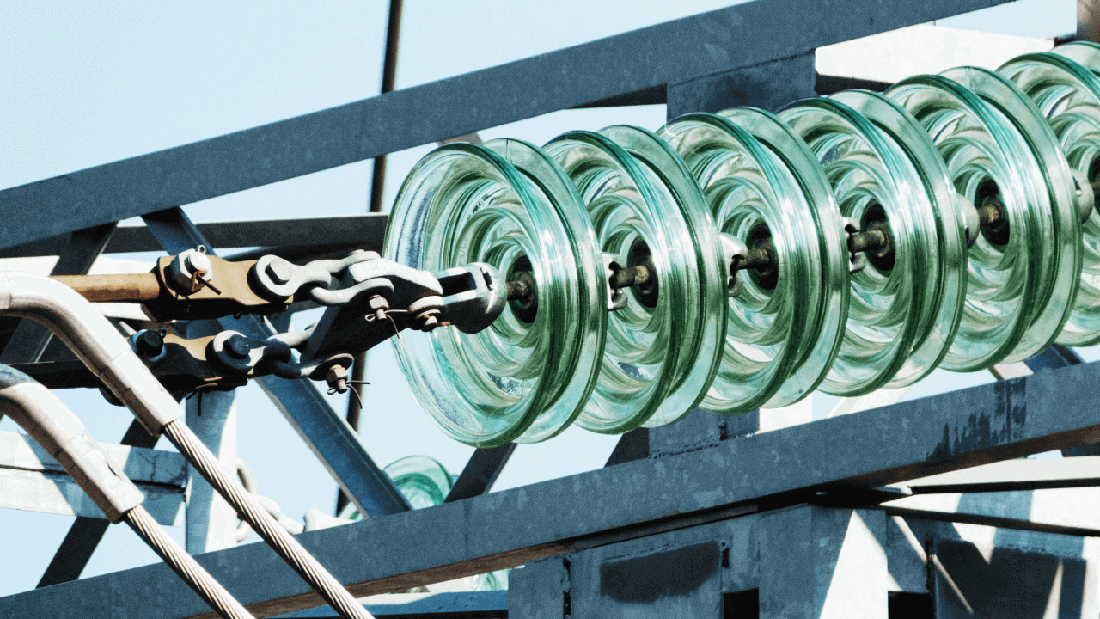
ImportantGlass insulators are essential components in modern power systems, ensuring the safe and reliable flow of electricity from generating stations to consumers. Their role is not only to hold conductors but also to prevent leakage currents and flashovers. Understanding their properties, applications, and maintenance is crucial for utility professionals who design and operate reliable networks. To understand the role of glass electrical insulators in the grid, begin with an overview of long-distance power transmission and the planning and maintenance of transmission lines.
Comparison of Electrical Insulator Types
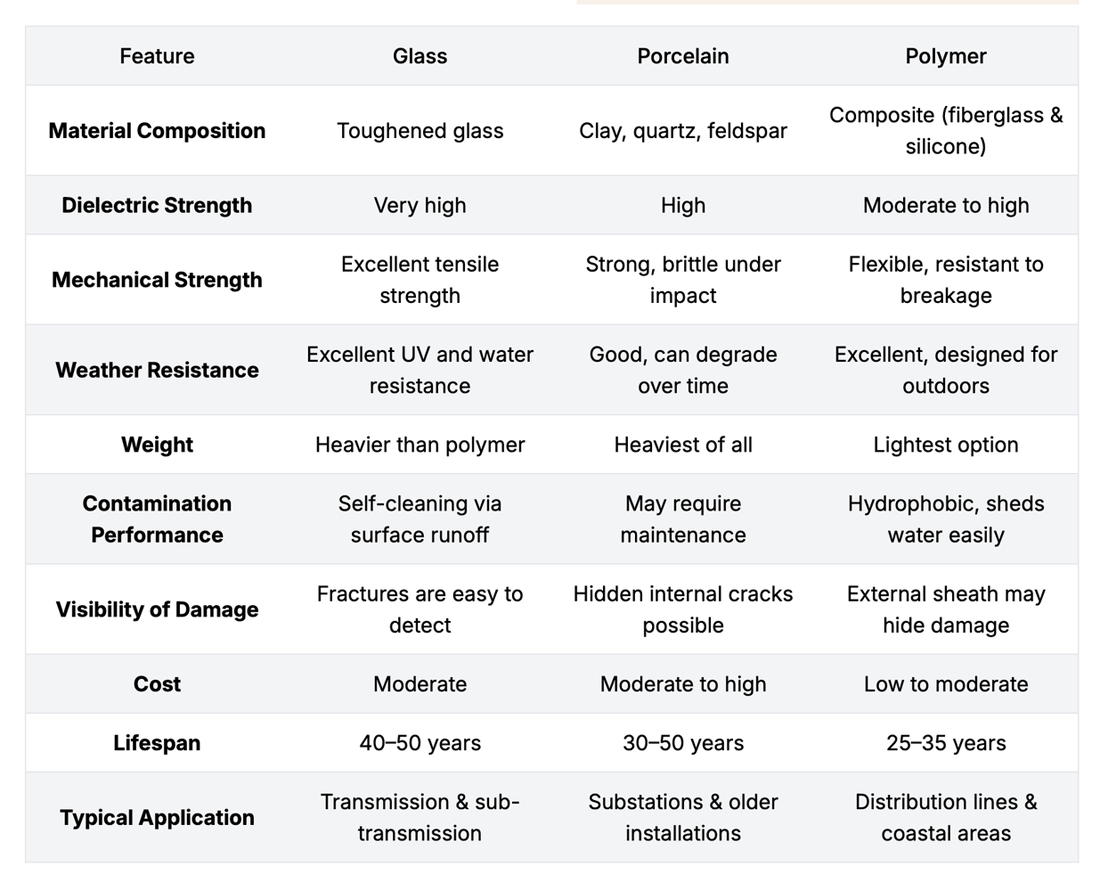
Dielectric and Mechanical Properties
Toughened glass offers high tensile resistance, withstanding conductor loads, wind pressure, and ice accumulation.
These combined properties make glass insulators particularly reliable in high-voltage environments. For fundamentals and material choices that influence glass, porcelain, and polymer, review the primer on electrical insulators.
Electric Field and Creepage Distance
Contamination reduces creepage performance, increasing the risk of flashover. For transmission systems, the design typically requires creepage ratios of 25-31 mm/kV. Voltage distribution across insulator strings must also be balanced; otherwise, stress concentrates on certain discs. Utilities often use grading rings to improve field distribution and reduce corona. Because leakage and flashover risks grow with span length and voltage, compare insulation needs on AC transmission lines.
Failure Modes and Reliability Issues
Despite their strengths, glass insulators are not immune to failures. A well-documented phenomenon is self-blast— spontaneous shattering due to internal impurities or thermal stress. Microcracks, aging, and partial discharge can also degrade performance. While shattering does not usually cause outages-because the cap-and-pin hardware still holds-the damaged "stub" alters electrical behavior and increases stress on the remaining discs. Utilities rely on infrared thermography, UV cameras, and periodic inspection to detect defects early and avoid cascading failures.
Testing and Standards
• Power-frequency withstand voltage (IEC 60383)
• Lightning and switching impulse tests
• Pollution performance tests (IEC 60507, IEC 60815)
• Mechanical tensile and bending strength tests
• Thermal cycle and aging tests
• Salt fog and dust chamber contamination tests
These assessments ensure long-term reliability under electrical, mechanical, and environmental stresses.
Applications of Glass Insulators in Different Voltage Levels
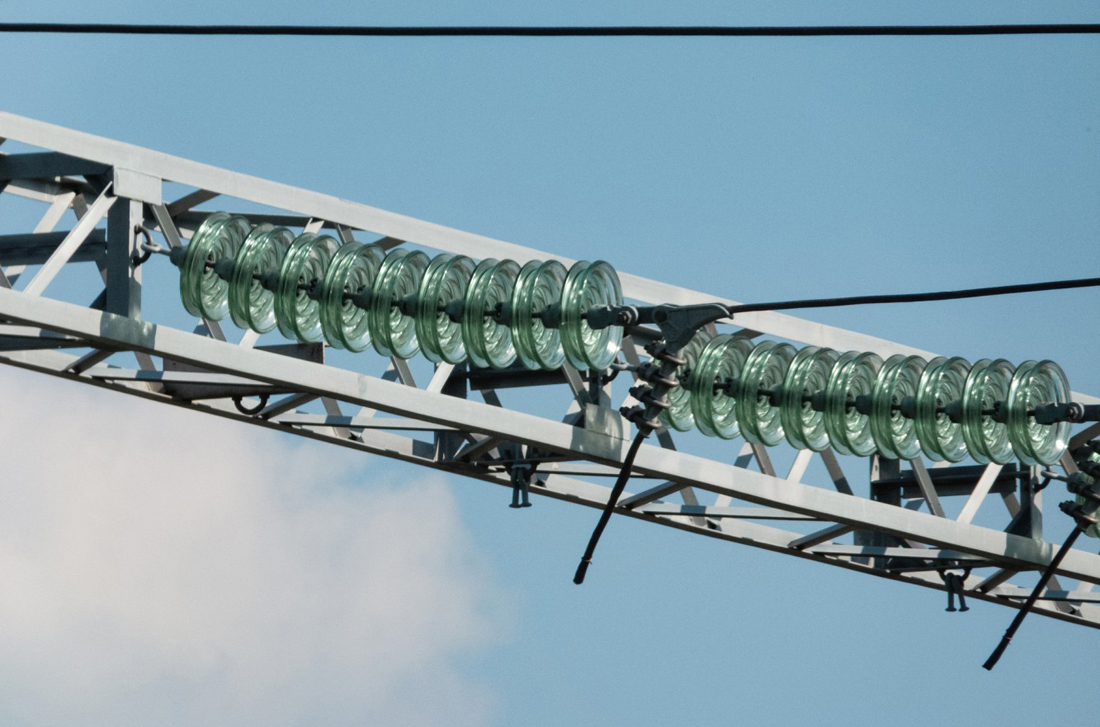
Glass insulators are widely used from low-voltage distribution to ultra-high-voltage transmission. Pin-type insulators serve lower voltages, while suspension discs-linked in strings of 10-12 discs for a 400 kV line-handle higher voltages. Strain insulators manage tensile forces at line ends and angles. Post insulators are common in substations. Each design addresses specific electrical and mechanical demands. On the distribution side, insulator selection is directly tied to topology and contamination levels, as covered in electric power distribution and deeper system design in electrical distribution systems.
Environmental Impact of Glass Insulators
lifecycle impact. Studies also show that glass insulators maintain their surface properties over decades, thereby reducing the need for maintenance. A foundational overview of materials and construction can be found in the article on the electrical insulator.
Innovations and Coatings
These innovations extend lifespan, reduce cleaning cycles, and lower the risk of self-blast.
Case Studies and Field Experience
Economics and Market Trends
Global demand for glass insulators is increasing with the growth of renewable energy integration and transmission expansion. While initial costs are moderate, lifecycle benefits-long lifespan, low maintenance, and recyclability— make glass attractive compared to polymers that may degrade faster. Market reports indicate glass remains dominant in transmission, while polymers expand in distribution. Utilities also consider using monitoring devices, such as fault indicators, to complement insulator inspection and maintenance.
Installation and Maintenance
Proper installation ensures maximum performance. Insulators must be aligned to minimize mechanical stress and installed with the correct torque on the hardware. Best practices include live-line inspection, periodic cleaning in polluted areas, and prompt replacement of shattered units. Preventive maintenance is critical to sustaining high reliability.
Best Practices